
AI-supported neuroeducational methodologies and logical-mathematical thinking in teacher training
##plugins.themes.bootstrap3.article.sidebar##
##plugins.themes.bootstrap3.article.main##
Abstract
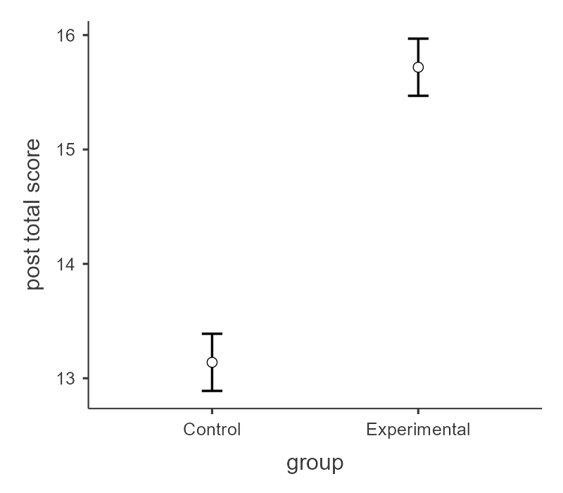
The study examined the effect of neuroeducational methodologies supported by artificial intelligence on logical-mathematical thinking in teachers in training in Basic General Education at the Technical University of Ambato, Ecuador. A quantitative approach was used with a quasi-experimental, longitudinal pre-test-posttest design with non-equivalent groups. The sample was made up of 480 students, distributed in a control group that received mathematics teaching supported by conventional ICT and an experimental group that participated in a 14-week intervention based on neuroeducational methodologies supported by artificial intelligence. Data were collected through a 21-item performance test that evaluated logical-relational reasoning, abstraction and mathematical representation, and strategic problem solving. The internal consistency of the instrument was adequate (Cronbach's alpha = 0.816; McDonald's omega = 0.817). The analysis included descriptive statistics, ANCOVA, and linear regression in Jamovi. After controlling for pre-test scores, the ANCOVA showed a significant effect of group on post-test logical-mathematical thinking F (1,477) = 206, p < 0.001, η²p = 0.302. Linear regression indicated that belonging to the experimental group significantly predicted final performance (B= 0.810, β= 0.882, t= 49.0, p < 0.001). The results suggest that neurodidactic methodologies structured and supported by artificial intelligence can strengthen logical-mathematical thinking in initial teacher training.
##plugins.themes.bootstrap3.article.details##

This work is licensed under a Creative Commons Attribution-ShareAlike 4.0 International License.
The author is responsible for acquiring the permission(s) to reproduce any copyrighted figures, tables, data, or text that are being used in the submitted paper. Authors should note that text quotations of more than 250 words from a published or copyrighted work will require grant of permission from the original publisher to reprint. The written permission letter(s) must be submitted together with the manuscript.References
Al-Shammari, A., & Al-Enezi, S. (2024). Role of artificial intelligence in enhancing learning outcomes of pre-service social studies teachers. Journal of Social Studies Education Research, 15(4), 163–196.
Alvarez, J. I. (2024). Evaluating the impact of AI–powered tutors mathgpt and flexi 2.0 in enhancing calculus learning. Jurnal Ilmiah Ilmu Terapan Universitas Jambi, 8(2), 495–508. https://doi.org/10.22437/jiituj.v8i2.34809
Andrade, C. (2021). The limitations of quasi-experimental studies, and methods for data analysis when a quasi-experimental research design is unavoidable. Indian Journal of Psychological Medicine, 43(5), 451–452. https://doi.org/10.1177/02537176211034707
Asempapa, R. S., & Lee, D. (2025). Preservice teachers’ knowledge of math modeling: Initial scale development and validation. Discover Education, 4(1), 68. https://doi.org/10.1007/s44217-025-00458-x
Badolo, M. u., Malik, M. A., Nur, R. a., & Latifa, A. (2025). The impact of metacognitive strategy training on higher-order thinking skills (HOTS) in high school mathematics: A quasi-experimental study. International Journal of Environment, Engineering and Education, 7(2), 146–157. https://doi.org/10.55151/ijeedu.v7i2.302
Banihashem, S. K., Bond, M., Bergdahl, N., Khosravi, H., & Noroozi, O. (2025). A systematic mapping review at the intersection of artificial intelligence and self-regulated learning. International Journal of Educational Technology in Higher Education, 22(1), 50. https://doi.org/10.1186/s41239-025-00548-8
Basterra-González, A., Machimbarrena, J. M., Ortega-Barón, J., & González-Cabrera, J. (2026). Eficacia en prevención autónoma de riesgos disfuncionales y uso responsable de internet en adolescentes: programa DOMINUS [Effectiveness in autonomous prevention of dysfunctional risks and responsible internet use in adolescents: DOMINUS program]. Revista de Psicodidáctica, 31(1), 500179. https://doi.org/10.1016/j.psicod.2025.500179
Birtwistle, E., Chernikova, O., Wünsch, M., & Niklas, F. (2025). Training of executive functions in children: A meta-analysis of cognitive training interventions. SAGE Open, 15(1), 18. https://doi.org/10.1177/21582440241311060
Bond, M., Oxley, E., & Lymperis, L. (2025). AI applications in initial teacher education: A systematic mapping review. In S. Popenici, J. Rudolph, F. Ismail, & S. Tan (Eds.), Handbook of artificial intelligence in higher education (pp. 550–575). https://doi.org/10.4337/9781035338764.00046
de Oliveira Almeida, G. (2026). Quasi experiments and natural experiments. In V. Ratten (Ed.), International encyclopedia of business management (Vol. 3, pp. 492–494). Academic Press. https://doi.org/10.1016/B978-0-443-13701-3.00202-4
Dugard, P., & Todman, J. (1995). Analysis of pre‐test‐post‐test control group designs in educational research. Educational Psychology, 15(2), 181–198. https://doi.org/10.1080/0144341950150207
Espinoza-Ortiz, A. A., & Guerrero-Jiménez, K. M. (2026). Executive functions and mathematics performance in primary school students: A systematic review. International Journal of Educational Research Open, 10, 100562. https://doi.org/10.1016/j.ijedro.2025.100562
Ferrari, A., de Lange, F. P., & Akrami, A. (2026). Where learning paths meet: Convergence and divergence of statistical and reinforcement learning. Current Opinion in Neurobiology, 98, 103181. https://doi.org/10.1016/j.conb.2026.103181
Flores, R. A. R., & Peña, M. A. G. (2024). Aprendizaje basado en modelización asistido con inteligencia artificial en las ciencias naturales: Propuesta de intervención neurodidáctica [Learning based on modeling assisted with artificial intelligence in natural sciences: Neurodidactic intervention proposal]. Praxis Educativa, 19, 1–19. https://doi.org/10.5212/PraxEduc.v.19.22722.011
Govender, S., & Ramatea, M. (2025). Current trends in artificial intelligence application for pre-service teacher training in Africa: For use with learners with special learning needs. In O. A. Ajani (Ed.), Empowering pre-service teachers to enhance inclusive education through technology (pp. 259–280). IGI Global Scientific Publishing. https://doi.org/10.4018/979-8-3693-8759-7.ch010
Henríquez-Rivas, C., & Vergara-Gómez, A. (2025). Design and validation of a questionnaire to explore the geometric work of mathematics teachers. European Journal of Science and Mathematics Education, 13(2), 103–118. https://doi.org/10.30935/scimath/16161
Hruby, J. (2026). From classroom to career: Longitudinal evidence of leadership transfer in executive management education. The International Journal of Management Education, 24(2), 101389. https://doi.org/10.1016/j.ijme.2026.101389
Huang, Y., Xu, W., Sukjairungwattana, P., & Yu, Z. (2024). Learners’ continuance intention in multimodal language learning education: An innovative multiple linear regression model. Heliyon, 10(6), e28104. https://doi.org/10.1016/j.heliyon.2024.e28104
Ibrahim, M., Retnawati, H., Firdaus, F. M., Umar, U., Mufidah, M., Mahmudi, M. R., & Haliem, T. D. (2026). Mathematical numeracy skills for pre-service teacher: An effectiveness of the STEAM framework. Social Sciences & Humanities Open, 13, 102536. https://doi.org/10.1016/j.ssaho.2026.102536
Jeong, J. S., & González-Gómez, D. (2025). AI-driven chatbots in flipped-classroom mathematics education. In S. Papadakis (Ed.), Teaching with Artificial Intelligence (pp. 145–161). https://doi.org/10.4324/9781003685241-13
Ji, Z., & Guo, K. (2023). The association between working memory and mathematical problem solving: A three-level meta-analysis. Frontiers in psychology, 14, 1091126. https://doi.org/10.3389/fpsyg.2023.1091126
Junpeng, P. (2026). Effect of intelligent tutoring system-delivered scaffolding on mathematics progression: A multivariate study by school type and gender. Social Sciences & Humanities Open, 13, 102277. https://doi.org/10.1016/j.ssaho.2025.102277
Kania, N., Kusumah, Y. S., Dahlan, J. A., Nurlaelah, E., Gürbüz, F., & Bonyah, E. (2024). Constructing and providing content validity evidence through the Aiken's V index based on the experts' judgments of the instrument to measure mathematical problem-solving skills. REID (Research and Evaluation in Education), 10(1), 64–79. https://doi.org/10.21831/reid.v10i1.71032
Karabinus, R. A. (1983). Nonequivalent group designs: The use of ANCOVA, multiple regression, repeated ANOVA, and effect size. Evaluation Review, 7(6), 841–850. https://doi.org/10.1177/0193841x8300700608
Kim, H. J., Kim, G. E., Woo, D., Yu, S., & Lim, S. A. (2025). AI as a bridge between theory and practice in teacher education: How textual and metaverse-based ChatGPT modalities shape help-seeking. International Journal of Learning, Teaching and Educational Research, 24(7), 737–752. https://doi.org/10.26803/ijlter.24.7.36
Kim, Y. R., Park, M. S., & Joung, E. (2026). Exploring the integration of artificial intelligence in math education: Preservice Teachers’ experiences and reflections on problem‐posing activities with ChatGPT. School Science and Mathematics, 126(1), 9–23. https://doi.org/10.1111/ssm.18336
Kohnke, L., Zou, D., Ou, A. W., & Gu, M. M. (2025). Preparing future educators for AI-enhanced classrooms: Insights into AI literacy and integration. Computers and Education: Artificial Intelligence, 8, 100398. https://doi.org/10.1016/j.caeai.2025.100398
Liu, J., Zhang, Y., Li, W., Wang, Q., Niu, P., & Zhang, X. (2026). Adaptive vs. planned metacognitive scaffolding for computational thinking: Evidence from generative AI-supported programming in elementary education. Computers & Education, 241, 105473. https://doi.org/10.1016/j.compedu.2025.105473
Madadizadeh, F., & Bahariniya, S. (2025). Tutorial on internal consistency assessment by Cronbach's alpha and McDonald’s omega. Perioperative Care and Operating Room Management, 41, 100568. https://doi.org/10.1016/j.pcorm.2025.100568
Mafarja, N., Rahim, S. S. A., & Zulnaidi, H. (2026). Enhancing mathematical thinking among pre-service mathematics teachers: A systematic literature review. SAGE Open, 16(2), 15. https://doi.org/10.1177/21582440261445506
Ocak, C., & Caskurlu, S. (2026). Unpacking ethics-domain of intelligent-TPACK scale in relation to in-service teachers’ trust and distrust. Computers and Education Open, 10, 100321. https://doi.org/10.1016/j.caeo.2025.100321
Pagano, L. P., Garofalo, C., Mazzeschi, C., De Caro, E. F., & Delvecchio, E. (2025). A systematic review of environmental identity: Definitions, measurement tools, and future directions. Journal of Environmental Psychology, 105, 102657. https://doi.org/10.1016/j.jenvp.2025.102657
Panqueban, D., & Huincahue, J. (2024). Inteligencia artificial en educación matemática: Una revisión sistemática [Artificial intelligence in mathematics education: A systematic review]. Uniciencia, 38(1), 1–17. https://doi.org/10.15359/ru.38-1.20
Piaget, J. (1977). The development of thought: Equilibration of cognitive structures. Viking.
Prabawanto, S. (2019). Enhancement of students’ mathematical communication under metacognitive scaffolding approach. Infinity Journal, 8(2), 117–128. https://doi.org/10.22460/infinity.v8i2.p117-128
Rajabi, K. I. (2026). Modeling school teachers’ ethical use of AI tools in English instruction and its impact on student learning: A PLS-SEM approach. International Journal of Information and Education Technology, 16(1), 152–163. https://doi.org/10.18178/ijiet.2026.16.1.2490
Ruffini, C., Chini, C., Lombardi, G., Della Rocca, S., Monaco, A., Campana, S., & Pecini, C. (2024). Training executive functions within the mathematical domain: A pilot study with an integrated digital‐paper procedure in primary second‐grade. Mind, Brain, and Education, 18(1), 85–102. https://doi.org/10.1111/mbe.12404
Rui, X., Celik, I., & Edwards, J. (2025). Understanding pre-service teachers’ needs for integrating AI-based tools in instruction through intelligent TPACK framework. Computers and Education Open, 9, 100317. https://doi.org/10.1016/j.caeo.2025.100317
Santágueda-Villanueva, M., Sanz, M. T., López-Iñesta, E., Monferrer, L., & Lorenzo-Valentín, G. (2025). Design and validation of the P-MATHEX questionnaire: Assessing preservice teachers’ perceptions of pedagogical knowledge in mathematics and science. European Journal of Science and Mathematics Education, 14(1), 1–27. https://doi.org/10.30935/scimath/17522
Scheiner, T. (2016). New light on old horizon: Constructing mathematical concepts, underlying abstraction processes, and sense making strategies. Educational Studies in Mathematics, 91(2), 165–183. https://doi.org/10.1007/s10649-015-9665-4
Shirawia, N., Alali, R., Wardat, Y., Tashtoush, M. A., Saleh, S., & Helali, M. (2023). Logical mathematical intelligence and its impact on the academic achievement for pre-service math teachers. Journal of Educational and Social Research, 13(6), 239–254. https://doi.org/10.36941/jesr-2023-0161
Skemp, R. R. (1978). Relational understanding and instrumental understanding. The Arithmetic Teacher, 26(3), 9–15. https://www.jstor.org/stable/41187667
Sysoyev, P. V., Evstigneev, M. N., & Sorokin, D. O. (2025). Structural model of pre-service teacher training based on artificial intelligence technologies. Perspectives of Science and Education, 75(3), 139–155. https://doi.org/10.32744/pse.2025.3.9
Tegero, M., & Mabini, J. (2025). AI chatbot simulations in teacher training: Core teaching competencies developed through virtual practice. Journal of Teaching and Learning, 19(4), 216–232. https://doi.org/10.22329/jtl.v19i4.10087
Wolff, T. B., & Martens, A. (2025). Bringing AI to the classroom: A framework for systemic curriculum changes. In IEEE Global Engineering Education Conference (EDUCON), (pp. 1–9). https://doi.org/10.1109/educon62633.2025.11016614
Wu, J., Wang, J., Lei, S., Wu, F., & Gao, X. (2025). The impact of metacognitive scaffolding on deep learning in a GenAI-supported learning environment. Interactive Learning Environments, 33(9), 5166–5183. https://doi.org/10.1080/10494820.2025.2479162
Yang, S., & Appleget, C. (2025). Besties with bots: GenAI as a lesson plan evaluator for preservice teachers. Journal of Digital Learning in Teacher Education, 41(2-3), 101–115. https://doi.org/10.1080/21532974.2025.2474932
Yi, L., Liu, D., Jiang, T., & Xian, Y. (2025). The effectiveness of AI on K-12 students’ mathematics learning: A systematic review and meta-analysis. International Journal of Science and Mathematics Education, 23(4), 1105–1126. https://doi.org/10.1007/s10763-024-10499-7
Yılmaz, Z., Galanti, T. M., Naresh, N., & Kanbir, S. (2026). Exploring the interactions among instructor, prospective teachers and AI in facilitating mathematics learning. School Science and Mathematics, 126(1), 75–88. https://doi.org/10.1111/ssm.18341
Zagami, J. (2024). AI chatbot influences on preservice teachers' understanding of student diversity and lesson differentiation in online initial teacher education. In Proceedings of International Journal on E-Learning 2024, Waynesville, NC (pp. 443–455).
Zhang, X., & Zhang, W. (2026). Fostering creative instructional design: Unpacking the role of metacognitive scaffolding in an AI pedagogical agent for pre-service preschool teachers—A moderated mediation model. Education Sciences, 16(1), 172. https://doi.org/10.3390/educsci16010172
Zhang, Y., Tian, H., & Lu, J. (2025). The relationship between higher-order thinking and problem-solving skills development among pre-service teachers using generative AI: an analysis based on moderated mediation. BMC Psychology, 13(1), 1094. https://doi.org/10.1186/s40359-025-03404-6
Zhumabayeva, Z., Bazarbekova, R., Nurzhanova, S., Stambekova, A., & Kalbergenova, S. B. (2025). Development of neuro-didactic content aimed at developing the intelligence of younger schoolchildren. Frontiers in Education, 10, 1584490. https://doi.org/10.3389/feduc.2025.1584490
Ziying, L., Yongchun, H., & Qiaoping, Z. (2026). Harnessing artificial intelligence for preservice teachers’ development: A scoping review of applications, benefits, and challenges. Computers and Education Open, 10, 100330. https://doi.org/10.1016/j.caeo.2026.100330